Friday, January 15, 2016
Samuel Gultom Activities 2015
Sunday, September 19, 2010
Vacation To Samosir
Recently, my parents and me have been travelling to Toba Lake, Samosir, North Sumatera, Indonesia. That was a great experience with a beautiful sight all over the lake. For information, Toba lake is the World famous is the crater Toba Lake in the Batak highlands; approximately five hours drive from Medan. Toba Lake is the largest lake in South East Asia and also one of the most spectacular, surrounded by tall mountains and with the large island of Samosir in the middle. If we descend from the mountain we see the lake glittering in all its beauty. The Dutch writer Rudy Kousbroek even called Toba Lake, 'the most beautiful place on earth'. Most visitors stay on the peninsula of Tuk Tuk on Samosir, named after the linguist Herman Neubronner van der Tuuk. In general people stay several days on Samosir to discover the island, to visit traditional Batak villages, to swim in the lake and go to the hot springs in Pangururan. (source : Toba Lake Tourism)
This vacation was mean to me.....

Regards,Samuel Gultom
----------------------------------------------------
----------------------------------------------------
http://samuelgultom.blogspot.com
http://gultom.synthasite.com
http://samuelgultom.webs.com
http://samuelgultom.synthasite.com
http://sammy.dagdigdug.com
http://samuelgultom.blog.com
----------------------------------------------------
Samuel Gultom Store
Directory of Children Blogs
Baby-Parenting.co.uk
GSolusi Volt Stabilizer


Wednesday, January 27, 2010
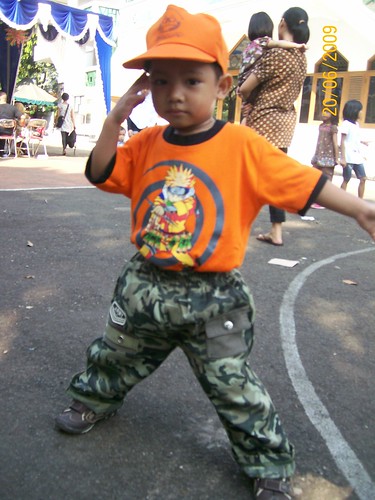
Sammy : Wanna Be A Soldier
My Grandpa was a soldier,,,, I do know him only by his picture, that my parents show me. I really like my Grandpa,,,I don't know where's the feeling comes in. At the moment I saw his pict, I think, I am alike his.
Well... it is fun to pretend as a soldier as well. My father and me always play like a soldier or a police. We seek a bad guy and try to eliminated the threat...
What do you expect for a three years old kids to be,,,, I don't have bedwetting anymore, even I go to toilet for "puk"...That's why my parents like my progress...
Now... I am gonna be a soldier..like my Grandpa..
You might be setting a goal to finish the toilet training less than a day so that for the days to come you will be absolved from changing diapers, will not waste anymore time to deal with resistance and rejection and also to spend more time with your child. However, this cannot be done with just one click of a remote. You have to work your way through to your child's trust and capability to cooperate with the toilet training.
First and foremost, you have to set your child's mind that in a few days both of you will go through the process of toilet training. Make him or her mentally ready for the training. It is easier this way than surprising your child by tomorrow that the potty training is going to start. This will also give your child the time to think and express what he or she thinks about toilet training the next day. Both of you will be able to communicate and this will give you an overview of how to deal with your child when the toilet training will come
After you have set your child mentally, prepare him or her physically. You can start by making him or her wear underwear or potty training pants and not diapers. Take off the diaper while talk to him or her about the benefits of the underwear or potty training pants that he or she will be wearing in the next few days. This will give your child an idea that you are really serious with the training and that he needs to learn as early as possible so that in time, he or she will not have a hard time using the toilet.
In pulling off your child's diaper, you will also arrive with an idea whether your child will cooperate or resist. It is a good sign when he or she cooperates at the start of pulling his or her diaper and changing him or her into the underwear. If your child shows eagerness then most probably the toilet training will not be as hard as you think. In addition, you may make your child pass through many times in the area where the potty is located. Show him or her the toilet and ask what he or she thinks about it. This will be very helpful because then your child's attitude will show before the toilet training will occur. You will see if your child likes the site of a toilet or not.
It is very important to prepare your child for everything you have planned so that it will not be a shock to him or her that you involved him or her in your activity. By the third day, when all is set, you will no longer have a hard time toilet training your child. Because for the past two days you have prepared your child for this, both of you will accomplish the toilet training less than a day.
Source :Liyah Cherby
Samuel Gultom
----------------------------------------------------
http://samuelgultom.blogspot.com
http://gultom.synthasite.com
http://samuelgultom.webs.com
http://samuelgultom.synthasite.com
http://sammy.dagdigdug.com
http://samuelgultom.blog.com
----------------------------------------------------
Samuel Gultom Store
Directory of Children Blogs
Baby-Parenting.co.uk

Tuesday, January 5, 2010
Christmas and New Year Moment
Well,, now we are going through year 2010. There were plenty moment to share...

So much memories here.........
Regards,Samuel Gultom
----------------------------------------------------
http://samuelgultom.blogspot.com
http://gultom.synthasite.com
http://samuelgultom.webs.com
http://samuelgultom.synthasite.com
http://sammy.dagdigdug.com
http://samuelgultom.blog.com
----------------------------------------------------
Samuel Gultom Store
Directory of Children Blogs
Baby-Parenting.co.uk


Friday, December 4, 2009
Samuel Gultom - Preschool
If a parent leaves him at preschool the first day, he might not make a fuss right away. After a while he might miss his parent. He might become frightened. The next day he might not want to leave home.
Introduce preschool gradually
Most preschools introduce children to their programs gradually. This is particularly helpful for the shy or sensitive child. Parents can stay with their children for as long as they wish. For several days a parent might stay nearby while their child plays and then take her home again after a time. Each day the parent can stay for a longer period. Meanwhile, your child is building up attachments to the teacher and other children. These will give her a sense of security when her parent no longer stays.
Sometimes a child seems quite happy for several days, even after his parent has left him. Then he gets hurt and suddenly wants his mummy or daddy. In that case, the teacher can help the parents decide if one of them should come back for a number of days.
Think about your own feelings
Sometimes your anxiety is greater than your child’s. If you say goodbye three times over, with a worried expression, your child might think, ‘It looks as if something awful might happen if I stay here alone’.
It's natural for a tenderhearted parent to worry about leaving a small child for the first time. Let the preschool teacher, who often has a lot of experience, advise you.
Be firm
A child who starts with some genuine anxiety about separating from the parent can learn that protesting allows him to avoid the situation.
She might then progressively use this to avoid preschool. When a child becomes reluctant or fearful about returning to a preschool with understanding teachers, it is usually better for the parents to act quite confident and firm and explain that the teacher will look after her and that she will be fine.
It can sometimes help to have someone different take a reluctant child to preschool. In any case, the child should not be deceived. He should be told that he has become friends with the teacher and the other children. Tomorrow his parent will not be staying at preschool. The parent should say goodbye once, cheerfully, then leave.
Here are some tips to help you and your child ease into the day-to-day practicalities of preschool.
Arrival and departure
Children’s Services regulations require parents and guardians to sign the child’s name and arrival time in a supplied book when children are dropped off. Parents also need to sign that they have picked up their child and at what time. This is a legal requirement for preschool.
Clothing
Comfortable, loose fitting clothing that doesn’t restrict your child’s movement is best for preschool. He'll need a hat for playing outside. It’s a good idea to check your child can handle zips and buttons so he can go to the toilet. See Dressing your toddler for more information.
Food
Some preschools ask you to bring fruit to share with the group; others prefer your child to eat their own snack. Some long-day care programs may ask parents to supply the child's lunch, other programs supply lunch. Ask your preschool for details. See How to pack a lunchbox for more information.
Illness record
Preschools must keep a formal written record of any medication your child needs. You will need to provide a written authority for this.
Problems
It’s a good idea to speak with preschool staff if any problems arise. Working things out quickly can prevent bigger issues.
Safety rules
All preschools have safety rules which parents need to know. These will include:
* who has permission to collect your child
* any out-of-bounds areas for children
* traffic issues, such as parking.
Sickness
Sick children are best kept at home, for their own benefit and so they don’t pass germs on to other children. If your child has an infectious illness it’s a good idea to let your preschool know so they can inform other parents.
Sunsmart
You need to supply a hat, because your child’s skin is more sensitive to UV radiation than adult skin. Preschools are responsible for providing shaded play areas and making sure children use sunscreen and hats.
It's best to avoid outdoor activities between 11 am and 3 pm in hot weather (and 4 pm in daylight savings). See Sun care for more information.
Toys from home
Each preschool has its own policy on whether children can bring toys from home. It’s best to check before your child packs his favourite teddy in his bag.
Parent participation
Preschools rely heavily on parents helping out. If you are able to help out, there are lots of opportunities to take part in the day-to-day activities or to be involved with preschool management.
Educational programs
Your preschool’s philosophy will be outlined in their information booklet. Details of the educational program will be displayed in the building and you can discuss this further with staff. You will also get a regular newsletter keeping you up-to-date with the current program.
Policies
Your preschool will have policies to deal with issues such as:
* fee payment
* managing behaviour
* asthma
* allergies.
This information should be on display within the preschool.
Fees
Fees and the way in which they are collected will vary from preschool to preschool. It’s a good idea to ask about your preschool’s policy ahead of time. Parents who hold a Commonwealth Health Care Card are eligible for a $250 annual preschool fee subsidy.
source: By Dr Benjamin Spock updated by Dr Robert Needlman
Samuel Gultom
----------------------------------------------------
http://samuelgultom.blogspot.com
http://gultom.synthasite.com
http://samuelgultom.webs.com
http://samuelgultom.synthasite.com
http://sammy.dagdigdug.com
http://samuelgultom.blog.com
----------------------------------------------------
Directory of Children Blogs
Baby-Parenting.co.uk

Thursday, October 8, 2009
Ten Ways To Save Green
are affordable ways to do your part to lessen your environmental footprint — you'll even save some cash at the same
time.
Go Shopping (for New Appliances)!
If your appliances are from the mid-'90s or before, they're probably so inefficient that it makes sense to replace
them. Look for appliances with the Energy Star label, which means that they use 10 to 50 percent less water and
energy than standard models—a substantial savings on your utility bills. (According to Department of Energy
calculations, a new clothes washer can save you up to $110 a year on your energy bills.) Find more information on
the Energy Star program.
Break Out the Baking Soda
Baking soda is a nontoxic substance that helps regulate pH, getting rid of bad odors caused by too much acidity
(food, BO) and two much base (fish and smoke). Plus, it's a gentle cleanser. Make a paste with BS and water for a
chemical-free way to shine your silver, pour it down the sink and run warm water to deodorize, or use it to scrub
the tub.
Slay (Energy) Vampires
Energy vampires are electronics (like TVs, DVD players and cell phone chargers) that still use energy even when
they're turned off. Guess what? This wasted power can add up to 20 percent to your energy bill. The best way to cut
down on energy-sucking is to unplug your appliances when they're not in use, or plug them all into a power strip and
turn that off. If all that switching is too much of a hassle (and let's face it, having the clock on your DVD player
is convenient), at least unplug your cell phone charger when it's not in use.
Pack a Bottle
According to one estimate, Americans go through more than 30 million water bottles a year. If you're drinking that
water on the go, you're probably throwing the bottle in the garbage — and that adds up to a lot of trash. Fill up a
reusable water bottle and you can stay hydrated, cut down on waste and save cash. If the bottles of water you buy in
a store are about $1 each, this baby will pay for itself in about eight uses.
Cruise in the Slow Lane
Gas mileage drops considerably when you go over 60 mph. According to the Department of Energy, you pay about 20
cents more per gallon for each 5 mph you go over 60. Over time, that's a lot of extra fuel, and cash! Excessive
accelerating and heavy breaking can also make your car less efficient, so make it a smooth ride. For more ways to
save on car expenses, go to fueleconomy.gov.
Plant a Tree — Seriously
Adding trees to the south, east and west side of your house shades your home, keeping it cooler. That means savings
of up to 25 percent on your home cooling costs. Get more ideas from the government's Energy Savers Web site.
Print on Both Sides
Whether you're at work or in your home office, whenever possible, print on both sides of your paper to reduce your
consumption. Or, even better, store files and emails on your computer, so you're not using any paper at all.
Go Native
Try to use plants and flowers that are native to your area in your garden. The benefit? Because they're already
adapted to the soil and water conditions, you won't have to use as much fertilizer and water to get them to grow.
For more information and lists of regional plants, go to plantnative.org.
Say, "It's Vintage"
Shopping at thrift stores like Goodwill or buying used goods on eBay can be super-cheap, but it's also eco-friendly.
Why? There's none of the energy consumed that would be used in manufacturing and transporting something new. Plus,
you're reusing furniture and clothing that might otherwise get thrown away. No need to say it's a thrift-store find.
Just call it "vintage" or "antique."
Get Your Kids in on It
Visit The Greens at meetthegreens.org, an interactive site for teens and tweens that features animated clips, a
blog, games and more. Hosted by two cartoon middle schoolers, the show teaches kids ways they can conserve and save
the environment. Will it get your kid to do the laundry — line-drying, of course? One can only hope.
source:Everyday Health
Other Ten Ways To Go Green
How can we live lightly on the Earth and save money at the same time? Staff members at the Worldwatch Institute, a global environmental organization, share ideas on how to GO GREEN and SAVE GREEN at home and at work.
Climate change is in the news. It seems like everyone's "going green." We're glad you want to take action, too. Luckily, many of the steps we can take to stop climate change can make our lives better. Our grandchildren-and their children-will thank us for living more sustainably. Let's start now.
We've partnered with the Million Car Carbon Campaign to help you find ways to save energy and reduce your carbon footprint. This campaign is uniting conscious consumers around the world to prevent the emissions-equivalent of 1 million cars from entering the atmosphere each year.
Keep reading for 10 simple things you can do today to help reduce your environmental impact, save money, and live a happier, healthier life.
#1
Save energy to save money.
State of the World
State of the World 2009:
Into a Warming World
* Set your thermostat a few degrees lower in the winter and a few degrees higher in the summer to save on heating and cooling costs.
* Install compact fluorescent light bulbs (CFLs) when your older incandescent bulbs burn out.
* Unplug appliances when you're not using them. Or, use a "smart" power strip that senses when appliances are off and cuts "phantom" or "vampire" energy use.
* Wash clothes in cold water whenever possible. As much as 85 percent of the energy used to machine-wash clothes goes to heating the water.
* Use a drying rack or clothesline to save the energy otherwise used during machine drying.
#2
Save water to save money.
* Take shorter showers to reduce water use. This will lower your water and heating bills too.
* Install a low-flow showerhead. They don't cost much, and the water and energy savings can quickly pay back your investment.
* Make sure you have a faucet aerator on each faucet. These inexpensive appliances conserve heat and water, while keeping water pressure high.
* Plant drought-tolerant native plants in your garden. Many plants need minimal watering. Find out which occur naturally in your area.
#3
Less gas = more money (and better health!).
Bicycle Commuters
World Watch Magazine
* Walk or bike to work. This saves on gas and parking costs while improving your cardiovascular health and reducing your risk of obesity.
* Consider telecommuting if you live far from your work. Or move closer. Even if this means paying more rent, it could save you money in the long term.
* Lobby your local government to increase spending on sidewalks and bike lanes. With little cost, these improvements can pay huge dividends in bettering your health and reducing traffic.
#4
Eat smart.
* If you eat meat, add one meatless meal a week. Meat costs a lot at the store-and it's even more expensive when you consider the related environmental and health costs.
* Buy locally raised, humane, and organic meat, eggs, and dairy whenever you can. Purchasing from local farmers keeps money in the local economy.
* Watch videos about why local food and sustainable seafood are so great.
* Whatever your diet, eat low on the food chain [pdf]. This is especially true for seafood.
#5
Skip the bottled water.
* Use a water filter to purify tap water instead of buying bottled water. Not only is bottled water expensive, but it generates large amounts of container waste.
* Bring a reusable water bottle, preferably aluminum rather than plastic, with you when traveling or at work.
* Check out this short article for the latest on bottled water trends.
#6
Think before you buy.
Low Carbon Energy
Low Carbon Energy Report
* Go online to find new or gently used secondhand products. Whether you've just moved or are looking to redecorate, consider a service like craigslist or FreeSharing to track down furniture, appliances, and other items cheaply or for free.
* Check out garage sales, thrift stores, and consignment shops for clothing and other everyday items.
* When making purchases, make sure you know what's "Good Stuff" and what isn't.
* Watch a video about what happens when you buy things. Your purchases have a real impact, for better or worse.
#7
Borrow instead of buying.
* Borrow from libraries instead of buying personal books and movies. This saves money, not to mention the ink and paper that goes into printing new books.
* Share power tools and other appliances. Get to know your neighbors while cutting down on the number of things cluttering your closet or garage.
#8
Buy smart.
Climate Change Reference Guide
Climate Change Reference
Guide
* Buy in bulk. Purchasing food from bulk bins can save money and packaging.
* Wear clothes that don't need to be dry-cleaned. This saves money and cuts down on toxic chemical use.
* Invest in high-quality, long-lasting products. You might pay more now, but you'll be happy when you don't have to replace items as frequently (and this means less waste!).
#9
Keep electronics out of the trash.
* Keep your cell phones, computers, and other electronics as long as possible.
* Donate or recycle them responsibly when the time comes. E-waste contains mercury and other toxics and is a growing environmental problem.
* Recycle your cell phone.
* Ask your local government to set up an electronics recycling and hazardous waste collection event.
#10
Make your own cleaning supplies.
Million Car Campaign
Join the Million Car Carbon Campaign by purchasing your Earth-Aid kit today.
* The big secret: you can make very effective, non-toxic cleaning products whenever you need them. All you need are a few simple ingredients like baking soda, vinegar, lemon, and soap.
* Making your own cleaning products saves money, time, and packaging-not to mention your indoor air quality.
source:Worldwatch Organization.

Regards,Samuel Gultom
----------------------------------------------------
----------------------------------------------------
http://samuelgultom.blogspot.com
http://gultom.synthasite.com
http://samuelgultom.webs.com
http://samuelgultom.synthasite.com
http://sammy.dagdigdug.com
http://samuelgultom.blog.com
----------------------------------------------------
Samuel Gultom Store
Directory of Children Blogs
Baby-Parenting.co.uk

Sammy Searh Engine